
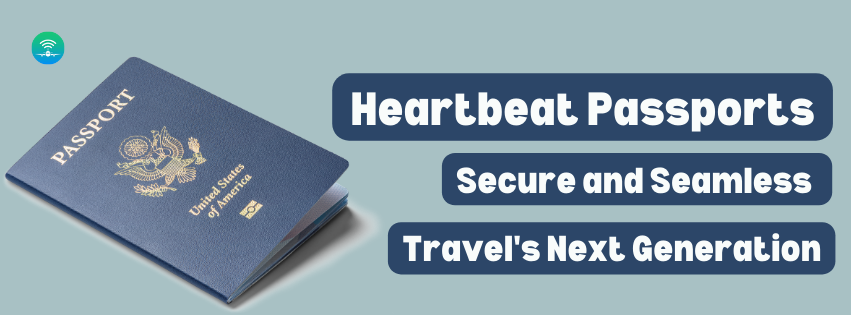
What is a heartbeat passport?
As we look into the future of travel, it is clear that advancements in technology will continue to shape and transform it. One such innovation that holds great potential is the concept of heartbeat passports.
A heartbeat passport is a travel document that incorporates a person's unique heartbeat pattern as a bio-metric identifier. Unlike traditional passports, which rely on visual verification and physical documents, while heartbeat passports are still in their early stages of development, but it is exciting to envision the possibilities they may bring to the future of travel.
The implementation of heartbeat passports would involve a simple and non-intrusive process. Imagine a scenario where travellers no longer need to fumble through their bags or pockets for their passports. Instead, they simply present their heartbeat passports and provide a real-time heartbeat sample at the airport security checkpoint. The officer then scans the passport, verifies the individual's identity through the biometric data, and grants access to the secure area.
The Technology behind Heartbeat Passports
At the core of Heartbeat Passports is biometric authentication. Biometric data, such as fingerprints, iris scans, and facial recognition, has been used for identification purposes for years now. This uniqueness makes heartbeat biometrics highly secure and difficult to replicate or imitate. Heartbeat Passports also use cutting-edge encryption techniques to offer the highest level of security. This guarantees that sensitive identify data is securely maintained and available only to authorized personnel when required.
The Advantages of Heartbeat Passports
- Enhanced Security: Heartbeat Passports' utilization substantially reduces the chances of fraudulent activities and making them a far more secure option for travel.
- Streamlined Border Control: With real-time verification, Heartbeat Passports significantly expedite the border control process. The seamless and swift passage through immigration checkpoints enhances overall travel efficiency, reduces wait times, and facilitates smoother journeys.
- Contactless Travel: Travellers can seamlessly verify their identity without the need for physical contact, promoting a hygienic and safe travel experience.
- Global Compatibility: Heartbeat Passports can be seamlessly integrated into existing travel infrastructure, making them a viable solution for universal adoption.
While heartbeat passports hold immense potential, there are challenges and considerations to address.
- Technology Infrastructure: The implementation of heartbeat passports would require substantial investment in infrastructure and technology. Governments and international organizations would need to collaborate to develop a standardized framework for collecting, storing, and verifying heartbeat data.
- Accuracy: Heartbeat scans may be affected by various factors such as physical exertion, stress, or certain medical conditions, potentially leading to false rejections or approvals. So that’s why Extensive research and development would be necessary to refine the technology and address these concerns to ensure a high level of accuracy and usability.
- Data Protection: As with any biometric data collection, privacy concerns arise. Robust data protection measures, such as encryption and stringent access controls, should be in place to safeguard individuals' sensitive information.
What Will Travel Look Like in 2070?
There are several forecasts regarding how the travel world will appear in 2070, some of which are as follows:
Hyperloop Networks: Hyperloop transportation systems could be widespread, offering high-speed travel between cities and regions. Passengers might travel in near-vacuum tubes at speeds exceeding 600 miles per hour, drastically reducing travel times.
Electric and Autonomous Vehicles: Personal and public transportation could predominantly be electric and autonomous. Self-driving cars and buses might provide safer, more efficient, and sustainable ways to move within cities.
Urban Air Mobility: Short-distance air travel within urban areas could be facilitated by electric vertical take-off and landing vehicles. Flying taxis and personal drones might be used for daily commutes.
Biometric Transit: Biometric authentication and other sophisticated security techniques may speed up and safeguard international travel by streamlining airport and border operations.
Virtual Reality Tourism: Advanced virtual reality experiences could provide realistic and immersive travel simulations, allowing people to virtually explore distant locations without leaving their homes.
Sustainable Aviation: With growing concerns about climate change, researchers may develop advanced biofuels, hydrogen-powered aircraft, or other sustainable aviation technologies to reduce the carbon footprint of air travel.
Remember that the future is highly uncertain, and many factors can influence technological advancements and societal changes. It's essential to stay informed about ongoing developments in travel and technology to understand how travel might evolve in the coming years.
In conclusion, Heartbeat Passports represent a paradigm shift in the world of travel, offering an exciting glimpse into a future of enhanced security and streamlined journeys. By leveraging biometric data in the form of a person's unique heartbeat pattern, these passports offer enhanced security, seamless travel experiences, and efficient border control procedures. As technology continues to advance and international collaboration strengthens, Heartbeat Passports may soon become the new norm, forward us into an era of secure and safer travel that fosters a deeper sense of global connectivity and exploration.
Keep traveling smarter with FlyFi travel app, and stay tuned for more travel tips!