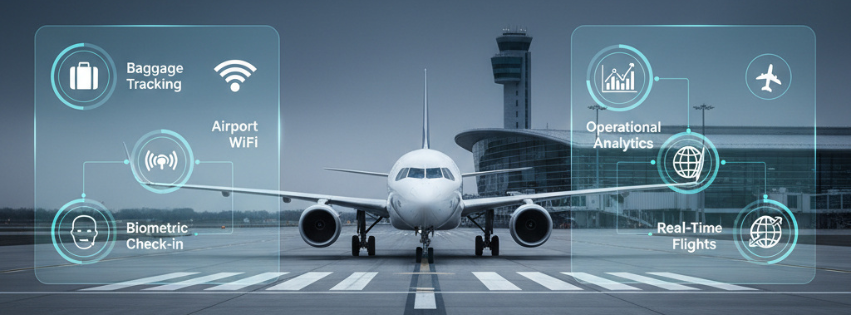
Every traveler has experienced it—the anxiety of wondering if your checked bag made the connection, the frustration of outdated flight information, or the confusion of navigating an unfamiliar airport. Behind the scenes, airports and airlines worldwide are deploying innovative technology to tackle these everyday travel challenges. Understanding these advancements can help you travel smarter and know what to expect at modern airports.
"While you're worried about missing your connection, AI has already rebooked your bag onto the next flight—without a single phone call."
The Baggage Problem That's Costing Billions
Mishandled luggage remains one of aviation's most persistent problems, costing the industry approximately $5 billion annually. If you've ever waited at baggage claim watching everyone else's luggage appear except yours, you're part of a statistic that airlines are working hard to reduce.
Paris Charles de Gaulle Airport is testing a revolutionary approach using computer vision and artificial intelligence. Instead of relying solely on traditional printed tags that can tear, fade, or be misread, the new system captures each bag's unique "digital signature" through high-resolution imaging. Advanced AI pattern recognition creates a detailed visual fingerprint of your luggage, making it trackable even if the physical tag becomes damaged.
This technology could be particularly valuable at major transfer hubs where bags move between multiple airlines and ground handlers. For travelers making tight connections, knowing your luggage is successfully following you provides invaluable peace of mind.
When Bags Miss Flights: AI to the Rescue
Even with better tracking, bags sometimes miss connections. Lufthansa has implemented an auto-reflight system that automatically rebooks missed bags onto the next available flight without human intervention. The system processes about 70% of Lufthansa's delayed baggage cases, significantly reducing the time travelers wait for their belongings.
This innovation could transform experiences at busy global hubs like London Heathrow and Frankfurt, where high passenger volumes and tight connection times create prime conditions for baggage mishaps. Some airlines are also testing auto-notification systems that alert passengers when their bag is confirmed missing, though implementation varies—Qantas initially sent notifications during flights but adjusted the system to notify passengers only after landing to avoid mid-flight anxiety.
For travelers, these systems mean faster resolution when problems occur. Instead of standing in long customer service queues, your bag is already being rerouted while you're still deplaning.
India's Digital Aviation Revolution
While Western airports upgrade existing infrastructure, India is building one of the world's most ambitious digital aviation networks from the ground up. The country operates the largest cloud-enabled platform for airport operations, managing passenger processing across 61 airports—both privately operated and government-run facilities.
This digital backbone handles everything from traditional check-in counters to biometric-enabled services like DigiYatra, India's facial recognition boarding system. The Airports Authority of India designed the system to ensure even smaller regional airports have access to technology typically found only at major international hubs.
With over 3,500 digital touchpoints planned, India's approach demonstrates how emerging aviation markets can leapfrog older infrastructure. As the world's third-largest domestic aviation market—handling 411 million passengers last year—India's digital-first strategy could serve as a blueprint for other rapidly growing markets.
New airports like Navi Mumbai and Jewar are being designed with automation at their core, incorporating integrated baggage systems and centralized resource management from day one rather than retrofitting older terminals.
Flight Tracking Apps: Your Window Into Operations
While airports upgrade their physical infrastructure, flight tracking apps have become essential tools for understanding what's happening with your journey. These apps tap into the same air traffic control data that airlines use, often providing updates before gate displays refresh.
Real-time flight tracking Apps helps you make better decisions during disruptions. If your app shows your inbound aircraft is delayed at its origin airport, you know your departure will be late before any official announcement. This early information lets you adjust plans—rescheduling ground transportation, booking a later connection, or simply grabbing lunch instead of rushing to the gate.
For travelers coordinating airport pickups, sharing live flight tracking links eliminates the guessing game. Your ride can see exactly when you'll land, accounting for early arrivals or delays, and track your taxi to the gate.
The Wi-Fi Challenge: Staying Connected in Transit
Airport connectivity has improved dramatically, but staying online while traveling still presents challenges. Most major airports offer free Wi-Fi, though network quality varies considerably. Some require multiple authentication steps, impose time limits, or struggle with bandwidth during peak hours.
Understanding airport Wi-Fi options before you travel saves time during tight connections. Flight Wi-Fi guides can help you determine which airlines offer in-flight connectivity, what speeds to expect, and whether purchasing internet packages makes sense for your needs. For business travelers who need reliable connectivity, knowing your options eliminates uncertainty.
Some airports are upgrading to next-generation networks that eliminate login requirements—passengers automatically connect when they enter the terminal. These seamless systems represent the future of airport connectivity, though implementation varies widely by location and funding.
Digital Tools That Simplify Navigation
Modern airports can overwhelm travelers with their size and complexity. Airport guides integrated into mobile apps provide terminal maps, real-time gate information, and estimated walking times between locations. Some airports have implemented indoor positioning systems that function like GPS inside terminals, showing your exact location and the fastest route to your destination.
These navigation tools prove particularly valuable for travelers with mobility challenges, families with young children, or anyone making tight connections. Digital systems can route you to elevators instead of escalators, identify wheelchair-accessible restrooms, and locate quiet areas for passengers who need sensory-friendly environments.
When Technology Fails: The Importance of Backup Systems
Aviation's growing dependence on digital infrastructure creates new vulnerabilities. Recent global IT outages have demonstrated how quickly travel can grind to halt when systems fail. Airlines and airports are investing in local fallback systems to maintain operations during digital disruptions.
For travelers, this means understanding that technology enhances but shouldn't replace basic preparedness. Downloading boarding passes before arriving at the airport, taking screenshots of important information, and arriving with buffer time all help when systems experience problems.
Meeting the Needs of Changing Travelers
As aviation expands globally, airports are seeing more first-time flyers and older passengers who may be less familiar with digital processes. Recent passenger surveys reveal growing demand for clearer communication and simpler technology interfaces.
This demographic shift is influencing how airports implement new systems. Rather than assuming all travelers are tech-savvy, modern digital tools increasingly include multiple language options, large text options, and staff assistance for those who need help navigating new technology.
What This Means for Your Next Journey
These technological advances aim to create a seamless experience from check-in to baggage claim. Before your next trip, consider downloading your airline's app for real-time updates, reviewing your departure airport's terminal layout, and understanding which digital services are available at your specific airports.
Smart baggage tracking, AI-powered rebooking systems, and improved airport connectivity won't eliminate all travel hassles, but they're steadily removing friction points that have frustrated travelers for decades. As these technologies mature and spread globally, the gap between best-in-class airports and average facilities should narrow, creating more consistent experiences regardless of where you're flying.
The future of air travel isn't just about faster planes—it's about smarter systems that anticipate problems, communicate clearly, and give travelers the information they need to journey confidently.